 Home
HomeHome / GTC Shanghai 2026: The Complete Exhibitor Guide for AdTech & Gaming Brands Going Global
GTC Shanghai 2026: The Complete Exhibitor Guide for AdTech & Gaming Brands Going Global
Posted By: Eventsfreeby Blogger
Last Update : Aug 18, 2026



 Copied!
TL;DR
What is GTC Shanghai 2026?
Global Traffic Conference (GTC) Shanghai 2026 is a leading international B2B exhibition and conference focused on cross-border expansion, digital marketing, and global user acquisition strategies. The event brings together e-commerce platforms, game publishers, marketing technology providers, and growth experts to explore emerging trends in AI-driven traffic acquisition, monetisation, and global business scaling.
When and where?
GTC Shanghai 2026 runs November 4–5 at the Shanghai World Expo Exhibition and Convention Center in Pudong. Address: No. 1099 Guozhan Road, Pudong New Area, Shanghai, China.
Scale:
With over 15,000 square metres of exhibition space, 200+ exhibitors, and more than 20,000 attendees expected, GTC serves as the key platform for enterprises seeking to enhance their global competitiveness and reshape the cross-border e-commerce and game publishing landscape.
Who exhibits?
Expected participation from leading platforms like TikTok, Meta, and Google, alongside cross-border payment providers and SaaS companies serving the international expansion market. Three exhibition zones cover Cross-Border E-Commerce Solutions, Game Publishing and Development, and Traffic Acquisition and Digital Marketing.
Who attends?
GTC's audience includes Chinese internet companies expanding internationally, cross-border e-commerce brands, app and game publishers, ad networks, traffic platforms, affiliate networks, monetisation companies, media buyers, platform operators, logistics and service providers.
What are the dominant themes in 2026?
AI-driven content, short drama apps, and new traffic formats are reshaping user acquisition in 2026. China's traffic ecosystem is not local anymore it is becoming global, and fast.
GTC Shanghai vs GTC Shenzhen:
GTC Shenzhen 2026 ran April 23–24 at the Shenzhen Convention and Exhibition Center. GTC Shanghai (November 4–5) is the larger, more internationally attended edition. For AdTech companies serving the full cross-border ecosystem, Shanghai is typically the higher-priority event.
How can Events Freeby help?
Events Freeby manages full exhibition participation for AdTech and gaming companies at GTC Shanghai booth design, on-ground logistics, freight coordination, and pre-event outreach strategy. Learn more about our GTC Shanghai services.
Introduction: Why GTC Shanghai Is the Most Important Room for AdTech and Gaming Brands Going Global in 2026
There is a specific conversation that happens at GTC Shanghai that you cannot replicate anywhere else in the Asian marketing and gaming calendar. It is not a conference about China as a domestic market. It is a conference about China as the world's most sophisticated exporter of digital product, traffic infrastructure, and mobile monetisation knowledge and the brands from both inside and outside China who are trying to connect with, learn from, or sell into that ecosystem.
China's traffic ecosystem is not local anymore it is becoming global, and fast. AI-driven content, short drama apps, and new traffic formats are not emerging anymore they are already reshaping user acquisition in 2026.
The technologies and traffic models that Chinese companies pioneered short-form video advertising, AI-driven performance marketing, hyper-local content monetisation at national scale are now the dominant global paradigm. TikTok's advertising platform runs on Chinese product thinking. The short drama app format that generated hundreds of millions of dollars in the US market in 2024 and 2025 was invented and scaled in China years earlier. The AI-powered user acquisition models that Western mobile marketers are now adopting as cutting-edge methodology were standard practice among Chinese app developers a cycle ago.
A principal discussion point at GTC China was the increasing use of AI in advertising. Artificial intelligence has made unprecedented advances to the degree that it has fundamentally transformed how advertisers target users and grow their businesses by developing data-driven models of user acquisition. This transformation for advertisers is forcing them to adopt new data-driven methodologies that provide more efficient ways of doing business than previously achieved.
GTC Shanghai the November 4–5 edition at the Shanghai World Expo Exhibition and Convention Center is where the companies at the centre of these transformations convene for two concentrated days of deal-making, partnership formation, and competitive intelligence gathering. For AdTech brands looking to expand into Asian markets, gaming companies seeking Chinese distribution and publishing partnerships, and international advertisers trying to understand how to compete effectively in a landscape shaped by Chinese platform thinking, GTC Shanghai is the event that delivers commercial outcomes that no Western marketing conference can replicate.
This is the complete exhibitor guide everything you need to know before you commit to a booth, design your exhibition strategy, and execute across the two days that could shape your company's Asia growth trajectory for the next two to three years.
Part 1: Understanding What GTC Shanghai Actually Is - And What It Has Become
The Origin and Evolution of GTC
The Global Traffic Conference has been organised by Baijing.cn since 2017 - which means it has been running for nearly a decade and has matured through multiple cycles of the Chinese internet economy's evolution. It started as a platform for Chinese digital companies to understand international traffic acquisition. It has evolved into something considerably more complex: a bidirectional marketplace where Chinese companies learn how to scale globally, and international companies learn how to enter, partner with, and compete against the Chinese digital ecosystem.
That bidirectional dynamic is what makes GTC genuinely different from most marketing conferences. It is not a US or European conference that has added an "Asia track." It is a Chinese industry conference that has become increasingly international which creates a buyer and exhibitor profile that you simply cannot access through any Western-market equivalent event.
The Three Exhibition Zones - Understanding Which One You Belong In
Exhibition areas cover cross-border e-commerce solutions, game publishing and development, and traffic acquisition and digital marketing.
Understanding these three zones is the starting point for every exhibitor's GTC Shanghai strategy, because each zone attracts a distinctly different visitor profile with different buying intent and different commercial conversations.
Zone 1: Cross-Border E-Commerce Solutions
Cross-border e-commerce solutions cover platforms, payment systems, logistics services, warehousing, brand marketing, and AI-powered e-commerce tools.
This zone is the commercial engine of GTC. Chinese brands selling internationally and international brands selling into China all need the same category of infrastructure: cross-border payment rails that work in both directions, logistics and warehousing partners with last-mile capability in target markets, platform technology for international e-commerce deployment, and AI-powered tools for managing the operational complexity of cross-border commerce at scale.
For AdTech companies whose products serve the cross-border e-commerce seller performance marketing platforms, creative optimisation tools, audience intelligence products this zone puts them directly in front of the operational decision-makers who are actively allocating advertising budgets across TikTok, Meta, Google, and emerging traffic channels.
Zone 2: Game Publishing and Development
Game publishing and development covers mobile games, PC and console games, cloud gaming solutions, game localisation services, game marketing and distribution platforms.
This is the zone that makes GTC specifically relevant for gaming brands going global. Chinese mobile game publishers companies with proven titles and domestic user bases come to this zone specifically to find international publishing partners who can take their games to Southeast Asia, Europe, the Middle East, and North America. International gaming brands come to find Chinese distribution partners, understand localisation requirements, and evaluate AI-powered user acquisition platforms built specifically for gaming traffic.
The game publishing zone at GTC Shanghai sits at the intersection of two of the most commercially active trends in global gaming in 2026: Chinese games going outbound to international markets, and international games seeking Chinese market access or Asian regional distribution. Both flows pass through GTC, making this zone one of the most commercially dense exhibition environments in the Asian gaming calendar.
Zone 3: Traffic Acquisition and Digital Marketing
Traffic acquisition and digital marketing covers social media marketing, affiliate networks, influencer marketing platforms, ad optimisation tools, and performance marketing services.
This zone is the natural home for core AdTech companies DSPs, ad networks, attribution platforms, creative intelligence tools, and programmatic trading solutions. The buyer at this zone is the media buyer, the user acquisition manager, the performance marketing director who is actively managing advertising budgets across multiple platforms and is evaluating technology that can improve efficiency, scale, or attribution accuracy.
GTC is best for traffic platforms, ad networks, media buyers, cross-border e-commerce companies, game publishers, app developers, monetisation platforms, affiliate networks, and companies expanding between China and global markets.
If your product or service sits in any of these categories, GTC Shanghai is not a nice-to-have event. It is the most efficient single event for accessing the commercial relationships your growth in Asia depends on.
Part 2: The Market Context That Makes GTC Shanghai Urgent in 2026
Why AI-Driven User Acquisition Is the Defining Conversation
A principal discussion point at GTC China was the increasing use of AI in advertising. Artificial intelligence has made unprecedented advances to the degree that it has fundamentally transformed how advertisers target users and grow their businesses by developing data-driven models of user acquisition. This transformation for advertisers is forcing them to adopt new data-driven methodologies that provide more efficient ways of doing business than previously achieved.
The AI user acquisition conversation at GTC is not theoretical. It is the most operationally urgent topic for every company at the event because the platforms they are buying traffic from TikTok, Tencent, Kuaishou, ByteDance's full advertising ecosystem have all moved to AI-first ad ranking and delivery systems. The advertisers who have adapted their creative strategy, their audience signal inputs, and their campaign architecture to work with AI-driven optimisation are outperforming those who have not by margins that show up in every performance report.
For AdTech vendors exhibiting at GTC Shanghai, the AI user acquisition conversation is both the context for every buyer conversation and the product differentiator that matters most. The question buyers ask at every AdTech booth is the same one they are asking internally every day: "Does this help me work better with AI-driven platforms, or does it create friction?"
The Short Drama App Economy - The 2026 Traffic Opportunity That Is Reshaping GTC Conversations
AI-driven content, short drama apps, and new traffic formats are already reshaping user acquisition in 2026.
Short drama apps serialised micro-drama content distributed through mobile applications, typically monetised through in-app purchases or subscription models represent one of the most significant new revenue categories in mobile entertainment in 2025 and 2026. The format, pioneered at scale in China, has expanded dramatically into North American and European markets, generating hundreds of millions of dollars in revenue and creating a new traffic acquisition challenge: how do you reach and convert an audience for a short drama app in markets where the format is unfamiliar?
For AdTech companies, short drama apps have created a new and commercially active buyer category at GTC app operators who are spending significant advertising budgets on platforms like TikTok, Meta, and connected TV networks, and who need creative testing tools, audience intelligence, and attribution solutions that understand this specific content category and its distinctive conversion dynamics.
For gaming companies, the short drama app ecosystem is commercially relevant as a competitive context both competing for the same media buying attention and potentially collaborating, as hybrid short drama-gaming formats have emerged that combine narrative content with gaming mechanics.
Cross-Border Commerce - The Infrastructure Everyone Is Building
Another important point of discussion at GTC China was the increase in cross-border commerce and international expansion. There are more and more businesses looking to operate outside of their home and core market areas, and events like GTC are a great way for them to connect with the appropriate partners and tools to do so.
The cross-border commerce conversation at GTC is not abstract. It is a specific set of commercial decisions being made by Chinese brands who have saturated their domestic market and are looking at Southeast Asia, Europe, the Middle East, and the Americas as their growth horizon and by international brands who have identified China or wider Asia as the next growth market but lack the local operational infrastructure to enter credibly.
For AdTech companies with cross-border capabilities multi-market audience targeting, cross-currency measurement, localised creative production, multi-language attribution GTC Shanghai is the event where the procurement decision-makers for this infrastructure are concentrated in one room. The e-commerce director of a Chinese brand scaling to Southeast Asia, the marketing technology buyer at a logistics platform serving international merchants, and the performance marketing manager of a Southeast Asian brand entering the Chinese market are all at GTC Shanghai with active evaluation criteria and real budgets.
Part 3: The Buyer Profile at GTC Shanghai - Who You're Actually Meeting
Understanding the Room Before You Design Your Booth
One of the most common mistakes first-time GTC Shanghai exhibitors make is assuming the buyer profile mirrors what they encounter at Western marketing conferences. It does not and understanding the difference is commercially important.
GTC's audience includes Chinese internet companies expanding internationally, cross-border e-commerce brands, app and game publishers, ad networks, traffic platforms, affiliate networks, monetisation companies, media buyers, platform operators, logistics and service providers.
This is a buyer mix that is heavily weighted toward operators companies that are actively managing real advertising budgets, real user acquisition campaigns, and real international expansion programmes. It is less weighted toward brand marketers and strategic planners than equivalent Western events. The result is that the conversations at GTC Shanghai tend to be more commercially direct, more operationally specific, and faster to reach a qualification decision than at conferences where brand-building is the primary agenda.
The Five Buyer Types Worth Preparing For Specifically
The Chinese app publisher going outbound. A mobile game publisher or app developer with proven domestic Chinese performance who is evaluating international user acquisition platforms, localisation services, and publishing partners for a Southeast Asian or global launch. This buyer wants to understand your platform's performance track record in their target market, your creative localisation capability, and your reporting integration with attribution platforms they are already using. They are commercially ready they have budget allocated and a launch timeline and they will evaluate multiple vendors at GTC in the same afternoon.
The international brand seeking Chinese market access. A European, North American, or Southeast Asian brand that wants to access the Chinese digital advertising ecosystem and is evaluating platforms, agencies, and technology partners who can navigate the specific requirements of advertising on WeChat, Douyin, Kuaishou, and Baidu. This buyer needs credibility signals specific to the Chinese context regulatory compliance knowledge, local team presence or partnership, and reference clients who have successfully entered the Chinese market through your platform.
The cross-border e-commerce operator. A merchant or brand operating across multiple markets who needs the AdTech infrastructure multi-market attribution, cross-currency payment, multi-platform media buying, creative localisation to manage a genuinely international commerce operation. Their buying criteria tend to be operational: does your platform reduce friction in their specific cross-border workflow, and can you demonstrate this with reference deployments from comparable merchants?
The media buyer and performance marketing professional. An individual practitioner or team lead managing significant advertising budgets across TikTok, Meta, Google, and emerging platforms who is evaluating optimisation tools, creative intelligence, and audience management products that improve their campaign efficiency. This buyer evaluates quickly, is technically sophisticated, and will probe your platform on specific functionality rather than engaging with high-level capability claims.
The investor and strategic scout. Venture investors, corporate development teams, and platform business development managers who use GTC Shanghai to evaluate emerging companies, assess market positioning, and identify partnership or acquisition targets. For growth-stage AdTech and gaming companies, this buyer category is commercially valuable in ways that extend beyond the immediate event the investor relationship or strategic partnership that begins at GTC can be transformational over a 12 to 24-month horizon.
Part 4: GTC Shanghai vs GTC Shenzhen - Making the Right Strategic Choice
The Two-Event Calendar and What Each Delivers
GTC runs twice annually: Shenzhen in April and Shanghai in November. Understanding the differences between the two events matters for exhibitors who are deciding where to allocate limited exhibition budget, and for those considering whether a two-event strategy makes commercial sense.
GTC Shanghai is the larger, more internationally attended edition of the Global Traffic Conference. The exhibition is structured around three zones Cross-Border E-Commerce Solutions, Game Publishing and Development, and Traffic Acquisition and Digital Marketing.
GTC Shenzhen ran April 23–24, 2026 at Hall 2 of the Shenzhen Convention and Exhibition Center. Shenzhen Global Traffic Conference (GTC) will take place from April 23 to 24, 2026 at Hall 2 of Shenzhen Convention and Exhibition Center, bringing together global industry leaders, cross-border e-commerce platforms, marketing innovators, and game publishers.
The Shenzhen edition has a more concentrated gaming and app development focus, reflecting Shenzhen's status as China's gaming and technology manufacturing hub. Tencent, whose headquarters is in Shenzhen, has a particularly strong presence in the Shenzhen edition's networking environment and the game publishers, mobile developers, and gaming platform operators who cluster around the Pearl River Delta tech ecosystem make Shenzhen the stronger event for companies whose primary commercial target is the gaming developer and publisher community.
GTC Shanghai, by contrast, has broader coverage across all three zones and typically draws a more internationally diverse attendee profile reflecting Shanghai's position as China's financial and commercial hub, the location of most multinational company Asia headquarters, and a natural anchor for the cross-border commerce conversations that involve both Chinese outbound brands and international inbound brands simultaneously.
For most AdTech companies, cross-border e-commerce technology providers, and businesses targeting the broadest possible mix of Chinese and international buyers, Shanghai is generally the higher-priority edition. For companies specifically focused on the gaming and app development vertical, Shenzhen deserves equal consideration. If your business genuinely has the budget and bandwidth for both, attending Shenzhen in April and Shanghai in November as a connected annual strategy rather than independent decisions lets you build relationships across the full calendar year rather than a single touchpoint.
Events Freeby supports exhibitor participation at both editions. If you are weighing this decision, our team can discuss your specific buyer profile and commercial objectives before you commit budget to either event.
Part 5: Pre-Show Strategy - The Preparation That Determines Your GTC Shanghai Outcome
Why 70% of Your Commercial Return Is Determined Before You Arrive
The most consistent finding across successful GTC Shanghai exhibitions is that the companies generating the most commercial value from their two days at the Shanghai World Expo Exhibition and Convention Center are those who arrive with their meeting calendar already 70–80% booked. GTC Shanghai is an intense, high-density two-day event the buyers you need to meet are simultaneously being pursued by dozens of other exhibitors, attending conference sessions, and managing their own meeting schedules.
The companies that fill their calendar through pre-event outreach rather than relying on floor traffic to deliver qualified visitors to their booth consistently walk away from GTC with a pipeline that justifies the exhibition investment. Those who rely on foot traffic walk away with a pile of business cards and a low conversion rate.
The GTC-Specific Outreach Approach
GTC Shanghai's predominantly Chinese and Asia-Pacific audience requires a culturally calibrated outreach approach that differs meaningfully from what works at Western marketing conferences.
Mandarin-language outreach significantly outperforms English-only outreach when targeting Chinese company attendees. Even when the recipient speaks English professionally, receiving an outreach message in Mandarin signals genuine market commitment rather than generic global expansion interest. If your team does not include Mandarin-capable staff, working with a China-market partner or a native-speaking freelance business development resource for the pre-event outreach phase is a worthwhile investment.
WeChat is the primary channel, not LinkedIn. For reaching Chinese professionals attending GTC Shanghai, WeChat is the professional relationship platform that LinkedIn is in Western markets. If you have WeChat connections in the Chinese AdTech or gaming ecosystem, activating those connections as warm introductions to target attendees is significantly more effective than cold outreach through any other channel.
Lead with a specific commercial proposition, not a general introduction. Chinese business culture responds well to directness about commercial intent the outreach message that states clearly what you do, what commercial outcome you are seeking from a meeting, and why you believe there is specific mutual value in the context of GTC is more effective than the Western conference networking preamble of general interest and vague potential.
Start your outreach six to eight weeks before GTC Shanghai. For an event running in early November, that means your first outreach messages should be deploying in mid-to-late September. This gives enough lead time to warm cold outreach into confirmed meetings, and allows for the back-and-forth scheduling that cross-time-zone meeting coordination typically requires.
The Pre-Show Content Strategy That Builds Credibility Before You Arrive
Publishing specific market intelligence content analysis of AI user acquisition trends in the Chinese market, performance data from cross-border gaming campaigns you have run, benchmark insights about short drama app advertising efficiency in the four to six weeks before GTC Shanghai serves two commercial purposes simultaneously.
First, it establishes your company's technical credibility with the sophisticated performance marketing audience that GTC attracts, before that audience encounters you on the show floor. A media buyer or UA manager who has read your analysis of TikTok algorithm changes and found it genuinely useful is in a fundamentally different mental state when they approach your booth than someone encountering your brand for the first time.
Second, it gives you a specific, non-promotional reason to reach out to target attendees in your pre-show outreach: "I wanted to share a piece of analysis we published on [specific topic] that's directly relevant to what you're building and I thought a meeting at GTC would be a good opportunity to discuss how we've seen this play out in practice."
Part 6: Booth Strategy and Design at GTC Shanghai - What Works and What Wastes Budget
The Specific Mistakes First-Time GTC Shanghai Exhibitors Make
A few patterns show up repeatedly among companies exhibiting at GTC Shanghai for the first time, and they're worth naming directly.
Designing for a Western conference audience. English-first booth materials, Western design aesthetics, and marketing language calibrated for a US or European technology buyer will underperform at GTC Shanghai. The visual language, case study references, and value proposition framing that resonates with a Chinese UA manager or an Asian cross-border e-commerce operator is different from what converts at, say, Mobile World Congress or AdWeek. If your booth materials have not been reviewed by someone with genuine experience of the Chinese digital marketing context, they are likely missing the signals that the GTC buyer responds to.
Overstaffing with non-Chinese-speaking team members. A booth staffed entirely by English-speaking team members from Western markets creates a friction point with the 60–70% of GTC attendees for whom Mandarin is the natural language of business conversation. Having at least one Mandarin-capable team member on your booth for both days is not optional it is the minimum staffing requirement for effective engagement with the core GTC Shanghai audience.
Under-investing in private meeting space. The most commercially valuable conversations at GTC Shanghai are not the ones that happen in the open aisle between your booth and the next exhibitor. They are the meetings that happen at a table where a Chinese app publisher can discuss specific partnership terms, where a cross-border payment provider can walk through a commercial proposal, where an investor can ask the questions they do not want overheard in a crowded hall. Booth designs that prioritise open demonstration space at the expense of a private meeting area are optimising for volume of conversation rather than quality of conversation the wrong priority at a two-day event.
Bringing only English case studies. The buyers most interested in your platform at GTC Shanghai want to know how it performs in Asian markets specifically Southeast Asian user acquisition, Chinese market entry, cross-border commerce between Asian and Western markets. If your case studies reference only US or European deployments, you are asking buyers to do the mental work of imagining how your product translates to their context. The exhibitors who bring Asian market case studies with specific campaign performance data from markets relevant to the GTC buyer are removing that translation burden and making the commercial case far more directly.
The Booth Design Elements That Drive the Right Conversations
Zone positioning matters more than booth size. Being in the right zone for your buyer profile Cross-Border E-Commerce, Game Publishing, or Traffic Acquisition delivers a more relevant visitor flow than a larger booth in a less relevant zone. Before finalising your booth location, map your target buyer profile against the three zones and prioritise zone fit over floor position visibility.
Platform logos that signal your integration story. TikTok, Meta, Google, Kuaishou, and major attribution platform logos displayed prominently on your booth immediately communicate your platform's integration landscape to buyers who are evaluating you specifically on the basis of how you work with their existing platform stack. If you are integrated with the platforms the GTC buyer is already spending on, make that visible at a glance.
Performance data displayed at a glance. The first filter most GTC buyers apply when evaluating a booth is performance: "What results does this platform actually deliver?" Having a specific, prominent performance claim "Average 34% improvement in ROAS for cross-border gaming campaigns" or "Reduces creative testing time by 60% for Chinese e-commerce brands" visible before a visitor even stops moving is more effective than any brand statement or product description at the same viewing distance.
Events Freeby designs and builds exhibition booths for AdTech and gaming companies at GTC Shanghai, calibrated specifically for the GTC buyer profile and venue requirements. We understand the specific build timelines, power requirements, and setup access arrangements at the Shanghai World Expo Exhibition and Convention Center, and we have supported first-time international exhibitors through the operational complexity of setting up in Shanghai. Explore our GTC Shanghai booth services.
Part 7: On-Ground Execution - Making the Two Days Count
Day One vs Day Two - How to Structure Your GTC Calendar
GTC Shanghai runs for two days which sounds brief but is actually an unusually concentrated commercial environment. The density of buyers in a 15,000 square metre exhibition space over two days means that the quality of your time management on the floor directly determines the commercial return on the entire investment.
Day one is for high-priority pre-booked meetings and first-time encounters. Your most important pre-confirmed meetings should be distributed across both days but weighted toward day one when buyer energy and decision-making attention are highest. Day one is also when the most commercially active buyers are working through their meeting schedules most systematically, which means foot traffic to well-positioned booths is typically denser in the morning and early afternoon.
Day two is for follow-through and relationship deepening. The conversations that progressed well on day one benefit from a day-two touchpoint a brief follow-up conversation that advances from interest to commercial specifics, or an additional meeting with a second stakeholder from a day-one contact's organisation. Day two is also when the booth team's qualitative assessment of which leads are genuinely qualified versus which are exploratory or not currently commercially relevant informs how you prioritise the remaining hours.
The Lead Capture and Qualification System That Most Exhibitors Skip
GTC Shanghai has no shortage of business cards, badge scanners, or contact information exchange. What separates exhibitors with genuine post-show pipeline from those with overflowing contact lists is the qualification information captured at point of contact.
For every meaningful booth interaction, capture four pieces of information beyond the contact details: their specific role and decision-making scope in their organisation, their current platform or tool stack for the relevant function, their primary market or geographic focus, and the specific challenge or objective that brought them to your booth. That information captured in a consistent format across both days transforms your contact list from a pile of business cards into a structured CRM dataset that enables genuinely personalised follow-up.
The most effective systems for doing this at GTC Shanghai are simple: a brief qualification sheet that booth staff complete immediately after each significant conversation, synced to your CRM at the end of each day. The companies that discipline their teams to complete this qualification at the point of contact rather than trying to reconstruct conversation details at the end of a two-day show have follow-up assets that generate pipeline. Those that do not have a contact list that decays in value with every passing day after the show.
The Language and Cultural Navigation That Changes Everything
For non-Mandarin speakers, GTC requires serious preparation.
This assessment understates the commercial importance of language preparation. At a conference where a significant majority of attendees are native Mandarin speakers who are conducting their most commercially serious conversations in Mandarin, the international company that has invested in even basic Mandarin capability a bilingual team member, professionally translated booth materials, a Mandarin-language product one-pager is signalling genuine market commitment in a way that its English-only competitors are not.
Cultural preparation goes beyond language. Business card exchange at GTC Shanghai follows Chinese professional etiquette present and receive cards with both hands, examine the card before putting it away, and never write on a received card during the interaction. Meeting schedules tend to run efficiently starting on time and ending on the agreed schedule is more standard at Chinese professional events than at Western conferences where casual time overruns are common. And the decision-making process for commercial partnerships in Chinese business culture typically involves relationship establishment before commercial negotiation which means the conversation at GTC Shanghai is more likely to be the beginning of a relationship than the closing of a deal.
Part 8: Post-Show Follow-Up - The 48-Hour Window That Determines Your GTC ROI
Why Speed and Specificity Both Matter
GTC Shanghai ends on November 5. The attendees flying back to their offices in Beijing, Guangzhou, Singapore, Jakarta, Seoul, and beyond are returning to operating environments where they were away from their desks for the better part of three days, and where the accumulated demands of their regular work immediately compete with their GTC follow-up intentions.
The commercial half-life of a GTC conversation is shorter than most Western conference equivalents. A buyer who expressed genuine interest in your platform on November 5 and receives no follow-up until November 12 has mentally downgraded the priority of that interest in proportion to the delay. The first follow-up from a GTC exhibitor that reaches a qualified prospect's inbox within 48 hours of the show closing has a response probability multiple times higher than the same message sent a week later.
Speed matters, but specificity matters more. The follow-up that converts is not "Great meeting you at GTC Shanghai here is our product brochure." It is "Following our conversation about your Southeast Asian launch for [specific game or app category] here is the campaign performance data I mentioned from a comparable publisher we worked with in Indonesia last year, and a proposed scope for the pilot programme we discussed." That level of specificity requires the qualification information to have been captured accurately during the show which is why the in-conversation qualification system matters so much.
The Follow-Up Format That Works for Chinese Business Culture
For Chinese contacts from GTC Shanghai, WeChat is a more effective follow-up channel than email for the initial post-show touch. The conversion from business card to WeChat connection, made at the event itself or within 24 hours via QR code, establishes the communication channel that Chinese professionals actually use for ongoing business relationship management. A follow-up message sent via WeChat within 24 hours of the show closing brief, specific, and containing a clear proposed next step is significantly more likely to receive a prompt response than an email sent to the same contact several days later.
For international contacts from GTC Shanghai, email remains the appropriate initial follow-up channel but the same principles of speed and specificity apply. A personalised email sent within 48 hours, referencing the specific conversation content, containing a relevant piece of evidence or insight, and proposing a clear next step (a specific call or demo time, not an open invitation to "connect") is the structure that converts post-show interest into ongoing commercial engagement.
Building Your 90-Day Post-GTC Follow-Up Sequence
The relationship cycle for commercial partnerships formed at GTC Shanghai is typically longer than for equivalent Western conference leads. Chinese business culture values relationship depth before commercial commitment which means the contacts who did not immediately convert to proposals at the show may be on a longer nurture timeline that eventually produces significant commercial outcomes.
Build a 90-day post-GTC follow-up sequence that provides ongoing value to your most qualified contacts: market intelligence pieces, relevant case studies as they are published, invitations to webinars or regional events in Asia, and periodic check-in messages that maintain the relationship without pushing prematurely for commercial decisions that the contact is not yet ready to make.
The companies that treat GTC Shanghai as a 90-day campaign rather than a two-day event are the ones whose GTC investment compounds into multi-year commercial relationships. Those that stop following up after the first non-response walk away from the majority of the value they paid to access.
Part 9: The Adjacent Events That Amplify Your GTC Shanghai Investment
Building a Shanghai Event Week Strategy
GTC Shanghai's November timing creates the opportunity to build a broader Shanghai market engagement strategy around the two-day event. For international companies making the travel investment to Shanghai for GTC, combining the event with one or two adjacent meetings client visits, distributor meetings, regulatory consultations, or visits to Chinese platform headquarters converts a two-day exhibition trip into a week-long commercial development programme.
Shanghai's concentration of advertising technology companies, mobile game publishers, cross-border commerce operators, and marketing platform offices means that the same trip to GTC can also include meetings with companies that are not at GTC but are commercially relevant to your Asia strategy.
ChinaJoy and the Complementary Gaming Exhibition Calendar
For gaming-focused brands, GTC Shanghai (November) sits at the end of a Chinese gaming exhibition year that begins with GTC Shenzhen (April) and runs through ChinaJoy in Shanghai (July–August). For companies specifically focused on the gaming and app development vertical, Shenzhen deserves equal consideration alongside Shanghai and if your business genuinely has the budget and bandwidth for both, attending Shenzhen in April and Shanghai in November as a connected annual strategy lets you build relationships across the full calendar year rather than a single touchpoint.
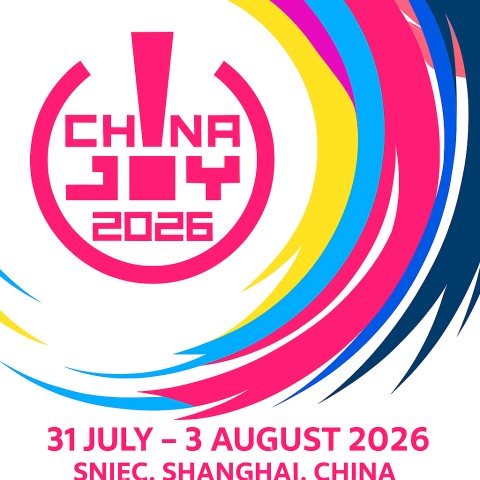
ChinaJoy which ran July 31 to August 3, 2026 at the Shanghai New International Expo Centre, attracting 900 companies from 39 countries and 140,000 square metres of exhibition space is the B2C gaming event that complements GTC's B2B focus. For gaming brands that want both consumer-facing brand presence and B2B partnership formation in the Chinese market, a ChinaJoy + GTC Shanghai annual strategy creates the dual-sided market presence that neither event alone can deliver.
Events Freeby manages exhibition participation for gaming and AdTech companies at both ChinaJoy and GTC Shanghai, and can build an integrated annual strategy across both events. Explore our full China exhibition services.
Part 10: What Events Freeby Does for AdTech and Gaming Brands at GTC Shanghai
We manage end-to-end exhibition participation for AdTech and gaming companies at GTC Shanghai specifically, the operational complexity that international companies consistently underestimate when exhibiting in China for the first time.
Booth design and fabrication calibrated for the GTC Shanghai buyer profile bilingual materials, zone-appropriate positioning, performance-forward visual hierarchy, and private meeting space within the booth design.
Freight forwarding and customs clearance for exhibition hardware and materials shipped to Shanghai. Temporary import requirements for exhibition equipment in China have specific documentation requirements, and customs delays for poorly documented shipments regularly cause exhibitors to miss the first day of setup.
On-ground logistics coordination in Shanghai managing the build crew, venue access timings, power and connectivity setup, and the on-site troubleshooting that inevitably arises during a multi-day international exhibition.
Pre-event outreach support helping international companies establish the market-relevant, Chinese-context outreach sequences that generate pre-booked meetings before the show opens.
Post-show follow-up structure building the 90-day follow-up calendar and content assets that convert GTC conversations into pipeline before the value of those conversations decays.
Talk to our team about GTC Shanghai 2026.
Frequently Asked Questions
Q: When and where is GTC Shanghai 2026?
GTC Shanghai 2026 runs November 4–5 at the Shanghai World Expo Exhibition and Convention Center in Pudong, at No. 1099 Guozhan Road, Pudong New Area, Shanghai, China. It is the larger, more internationally attended edition of the Global Traffic Conference, organised by Baijing.cn since 2017.
Q: What is the scale of GTC Shanghai 2026?
With over 15,000 square metres of exhibition space, 200+ exhibitors, and more than 20,000 attendees expected, GTC serves as the key platform for enterprises seeking to enhance their global competitiveness and reshape the cross-border e-commerce and game publishing landscape.
Q: Which platforms and companies attend GTC Shanghai?
Expected participation from leading platforms like TikTok, Meta, and Google, alongside cross-border payment providers and SaaS companies serving the international expansion market. GTC's audience includes Chinese internet companies expanding internationally, cross-border e-commerce brands, app and game publishers, ad networks, traffic platforms, affiliate networks, monetisation companies, media buyers, platform operators, and logistics and service providers.
Q: What are the three exhibition zones at GTC Shanghai?
Exhibition areas cover cross-border e-commerce solutions (platforms, payment systems, logistics services, warehousing, brand marketing, AI-powered e-commerce tools), game publishing and development (mobile games, PC and console games, cloud gaming solutions, game localisation services, game marketing and distribution platforms), and traffic acquisition and digital marketing (social media marketing, affiliate networks, influencer marketing platforms, ad optimisation tools, performance marketing services).
Q: Is GTC Shanghai right for AdTech companies?
GTC is best for traffic platforms, ad networks, media buyers, cross-border e-commerce companies, game publishers, app developers, monetisation platforms, affiliate networks, and companies expanding between China and global markets. For AdTech companies whose products serve performance marketing, user acquisition, creative optimisation, or attribution in Asian markets, GTC Shanghai is one of the highest-quality buyer-density events in the Asia Pacific calendar.
Q: What is the difference between GTC Shanghai and GTC Shenzhen?
GTC Shenzhen 2026 ran April 23–24 at Hall 2 of the Shenzhen Convention and Exhibition Center. GTC Shanghai (November 4–5) is the larger, more internationally attended edition. Shenzhen has a more concentrated gaming and app development focus reflecting the Pearl River Delta tech ecosystem. Shanghai has broader coverage across all three zones and typically draws a more internationally diverse attendee mix. For most AdTech companies, Shanghai is the higher-priority event; for companies specifically focused on gaming and app development, both events deserve consideration.
Q: What are the dominant themes at GTC 2026?
A principal discussion point at GTC China was the increasing use of AI in advertising. Artificial intelligence has fundamentally transformed how advertisers target users and grow their businesses by developing data-driven models of user acquisition. AI-driven content, short drama apps, and new traffic formats are already reshaping user acquisition in 2026. China's traffic ecosystem is not local anymore it is becoming global, and fast.
Q: How should international companies prepare for GTC Shanghai?
The most important preparation steps are: deploying Mandarin-language pre-event outreach six to eight weeks before the show; having at least one Mandarin-capable team member on your booth for both days; designing bilingual booth materials calibrated for the Chinese AdTech and gaming buyer profile; building a private meeting area within your booth space; capturing structured lead qualification information at the point of every significant booth conversation; and having a 48-hour post-show follow-up system ready to deploy before you travel to Shanghai.
Q: How can Events Freeby help AdTech and gaming companies exhibit at GTC Shanghai?
Events Freeby manages end-to-end exhibition participation for AdTech and gaming companies at GTC Shanghai, including booth design and fabrication with bilingual materials, freight forwarding and customs clearance for exhibition equipment, on-ground logistics coordination in Shanghai, pre-event outreach support calibrated for the Chinese market, and post-show follow-up structure. We have supported international companies through the operational complexity of exhibiting in China across multiple GTC editions. Get in touch to discuss your GTC Shanghai 2026 strategy.
Q: Can I attend GTC Shanghai without a booth?
Yes. GTC Shanghai is attended by thousands of professionals without exhibition booths media buyers, brand managers, game developers, and technology evaluators who attend as conference delegates or general attendees rather than exhibitors. However, for companies with specific commercial objectives generating qualified leads, meeting distribution partners, establishing market presence exhibition presence provides significantly more control over the buyer engagement than attending without a booth.
Conclusion: GTC Shanghai Is Not Just Another Asian Marketing Conference
The companies that get the most out of GTC Shanghai are the ones that understand what it actually is not a general marketing conference that happens to be in China, but a specialised commercial marketplace for a very specific set of industry relationships: Chinese companies going global, international companies entering Asian markets, and the AdTech and gaming infrastructure that makes both happen at scale.
GTC Shanghai 2026 is a leading international B2B exhibition and conference focused on cross-border expansion, digital marketing, and global user acquisition strategies. It enables businesses to access global markets, optimise performance marketing strategies, and build sustainable cross-border growth models in an increasingly competitive digital ecosystem.
For AdTech brands whose products sit at the intersection of Chinese platform thinking and global market execution and for gaming companies whose growth depends on finding the right publishing partners, distribution channels, or user acquisition infrastructure in Asia GTC Shanghai 2026 is the two days in November that have the most concentrated commercial relevance of any event in the year.
The companies walking away from GTC Shanghai 2026 with genuine pipeline are the ones that showed up with specific preparation: a pre-booked meeting calendar, a booth designed for the Chinese buyer, a team with Mandarin capability, and a follow-up system that deployed within 48 hours of the show closing.
If your AdTech or gaming company is planning exhibition presence at GTC Shanghai 2026 and you want a partner who understands both the operational complexity of exhibiting in China and the commercial logic of the GTC buyer environment, our team at Events Freeby is ready to help you plan and execute.
Published on Aug 18, 2026